

DISC Tests – Behavior Styles Assessment
DISC tests (in the extended version, the MaxieDISC® behavioral styles test) are used to study behavioral styles. It provides information about the respondent's behavioral style, their natural behavioral style, and the adaptation they make in the workplace.
This information is useful in business applications, as it can be used to determine a respondent's attitude towards changes, sales methods, management styles, and preferred team roles.
The „MaxieDISC® Behavior Styles Report” contains the following items:
- General characteristics
- Attributes
- Strengths
- Potential hazards
- Motivators
- Things that come easily
- What does not like
The MaxieDISC® test consists of 24 statements that need to be marked in the order that best describes you. It usually takes 20-25 minutes.
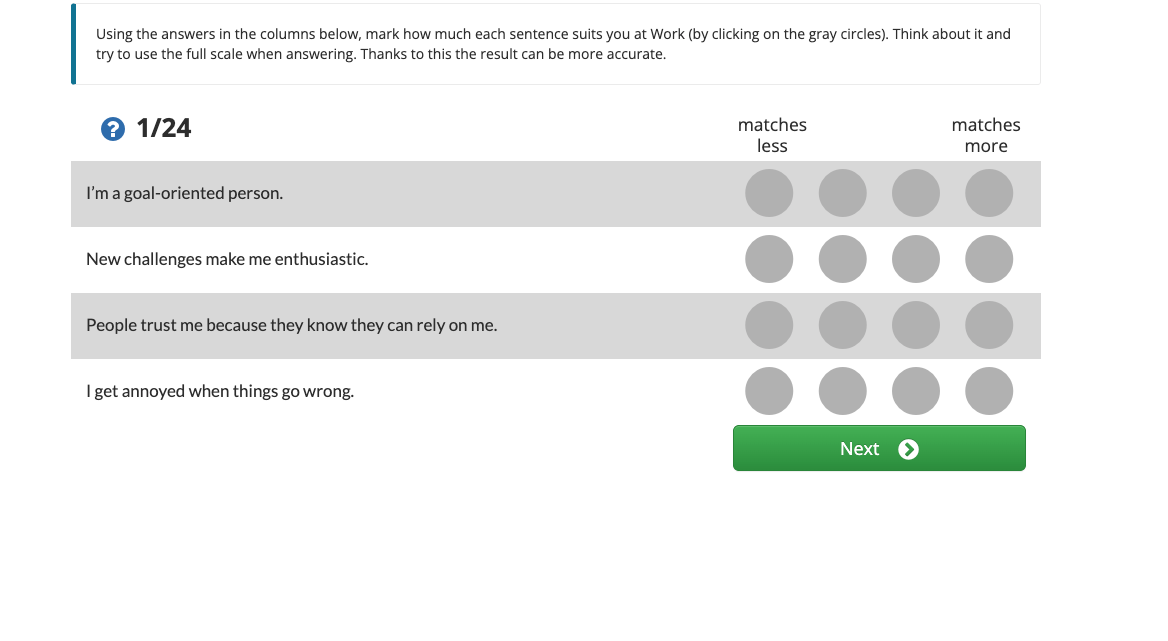
Based on the completed questionnaire, the system generates the „Maxie DISC® Behavior Styles Report”.
What can a MaxieDISC® test report be used for?
Reports generated from MaxieDISC® tests have a very wide range of applications. Because they convey a large amount of data about the respondent's behavioral style preferences, they can be effectively used for:
-
- To explore the team's potential and increase its effectiveness.
- Hiring people with the right skills.
- Conflict resolution in a team.
- Improving team efficiency by better matching tasks to employee skills.
- Quickly and effectively implement changes in the team/company
- Increase the effectiveness of leaders and managers.
- Coaching.
- Training. Both from the trainer's perspective (knowledge of the group) and the trainees' perspective (self-awareness and development).
- Financial Investing (Selection of Investment Strategy Based on Behavioral Styles).
- And many others. Applications can be found wherever we work with people.
Natural and Adapted Style – Useful Information from the Report
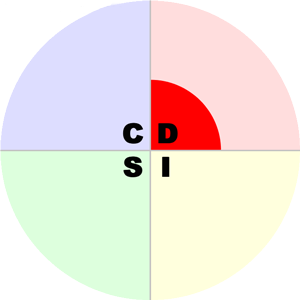
Adapted Behaviors
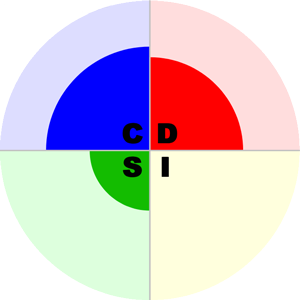
Natural Behaviors
The natural and adapted style charts of MaxieDISC® should be analyzed together.
The greater the difference between the charts, the more energy the subject expends on fitting (adapting) their natural (preferred) behaviors to those they consider desirable, for example, in the workplace or in a relationship.
The similarity of profiles indicates that the person being studied feels comfortable because, in a given area of life, e.g., professional, they act in accordance with themselves, in a way close to their preferred (natural) behavioral style.
Large differences between profiles suggest the possibility of discomfort related to forced (adapted) behavior, meaning acting in a way that is inconsistent with natural needs.
Of course, different people have different adaptive abilities and flexibility in adjusting to situations. Some people adapt to other styles more easily, while others find it difficult.
This is why taking the MaxieDISC® test can be so useful for learning about your adaptations in the workplace and what you can do to be more effective and satisfied.